

A well-written IEP goal should do more than describe something a student needs to improve.
It should show where the student is starting, which disability-related need is being addressed, what change is expected, and how the IEP Team will know whether the educational program is working.
That is why goal writing begins before the goal sentence.
The strongest sequence is:
evaluation → present levels → disability-related need → measurable annual goal → specially designed instruction and services → progress monitoring → revision
Under IDEA's IEP requirements, every IEP must include the student's present levels of academic achievement and functional performance, measurable annual academic and functional goals, a description of how progress toward those goals will be measured, and the services and supports needed to help the student advance toward them.
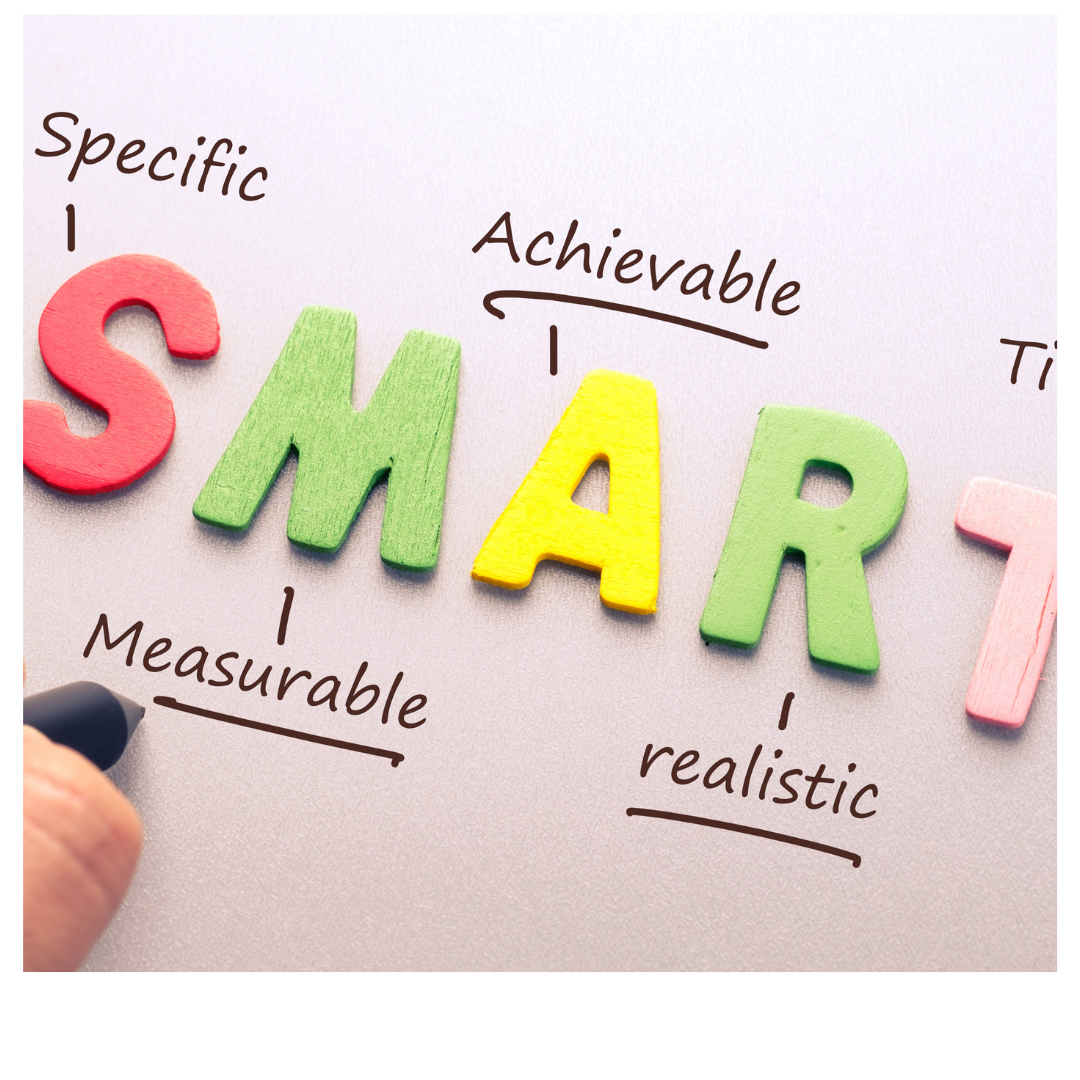
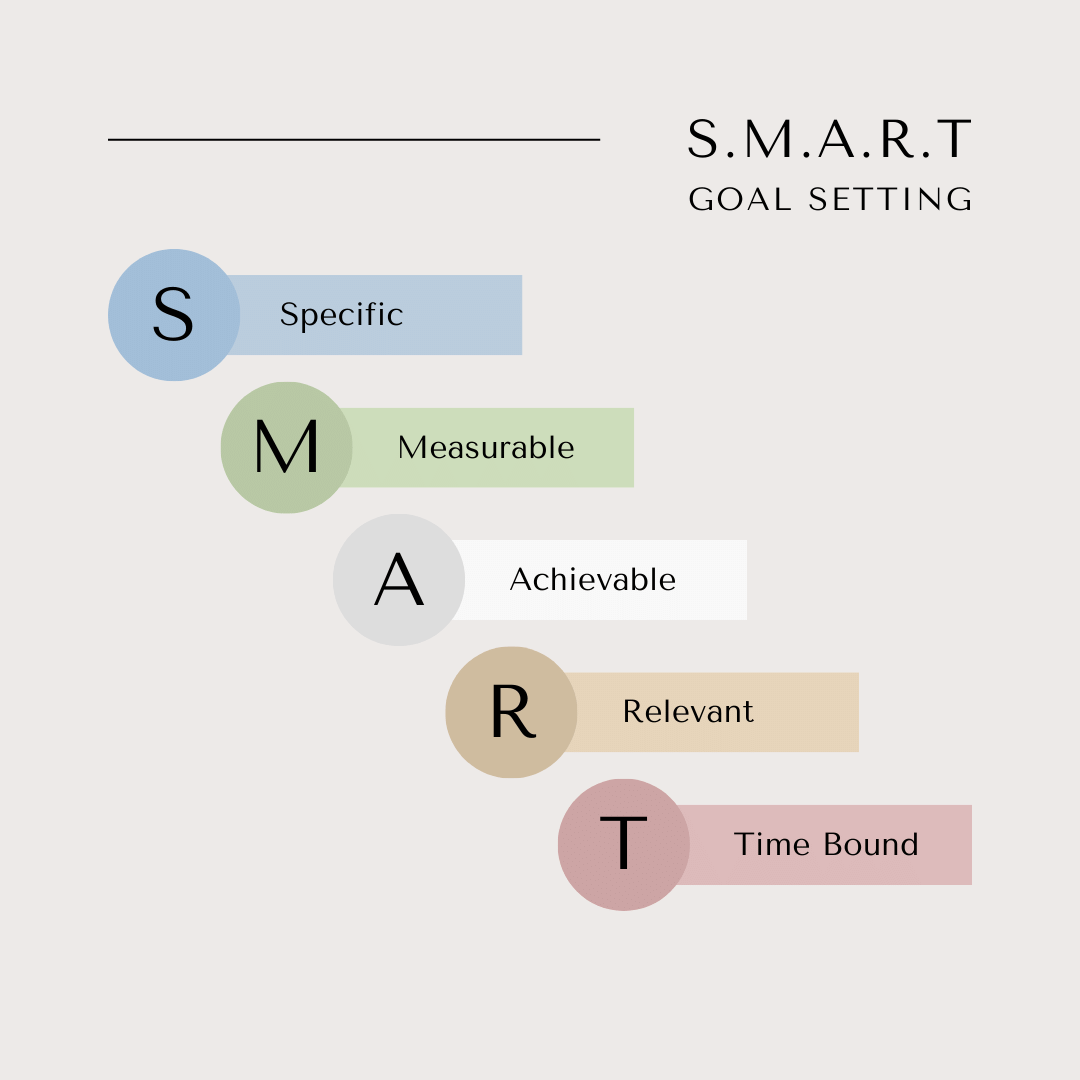
Educators often use the SMART framework—Specific, Measurable, Achievable, Relevant, and Time-bound—to help organize those goals.
SMART can be useful. It is not an IDEA requirement.
Federal law does not require the acronym, an 80% criterion, three consecutive sessions, or one standard sentence format. It requires goals that are measurable, individualized, and connected to the student's disability-related educational needs.
The distinction matters because a goal can satisfy every letter in SMART and still be poorly selected.
By June, the student will identify 50 sight words with 80% accuracy.
That goal is specific, measurable, time-bound, and potentially achievable. But if the student's actual reading difficulty is multisyllabic decoding in fifth-grade text, it is not relevant.
Good wording cannot compensate for the wrong target.
What IDEA Actually Requires From an IEP Goal
IDEA requires a statement of measurable annual goals, including academic and functional goals, designed to address the needs resulting from the student's disability so the student can be involved in and make progress in the general education curriculum and address other educational needs caused by the disability.
The IEP must also specify:
- how progress toward the annual goals will be measured;
- when progress reports will be provided; and
- which special education, related services, supplementary aids, program modifications, and staff supports will help the student advance toward those goals.
This creates an important chain:
present level → goal → instruction → data
If those parts do not correspond, the IEP becomes difficult to implement.
SMART Is Best Used as a Quality Check
The SMART framework can help educators review a draft.
Specific
What exactly will the student do?
Not improve math, but perhaps solve one-step multiplication and division word problems.
Measurable
What observable evidence will demonstrate performance?
Will the team use curriculum-based probes, work samples, frequency counts, rubrics, language samples, direct observation, or another defined measure?
Achievable
Does the expected progress make sense given the student's baseline, the intervention, instructional intensity, and the period available?
“Achievable” should not mean easy.
The Supreme Court's Endrew F. decision established a more demanding standard than trivial educational benefit. The Department of Education's Endrew F. guidance explains that IEPs must be reasonably calculated to enable progress appropriate in light of the child's circumstances and that every child should have an opportunity to meet challenging objectives.
Relevant
Does the goal address a documented educational need resulting from the disability?
Time-Bound
Annual IEP goals already operate within an annual IEP cycle, although teams may specify interim review points or benchmarks when useful.
The acronym can improve wording. The assessment still determines what belongs in the goal.
Start With the Present Levels
A goal describes movement. A present level tells us where the movement starts.
Consider: The student struggles with reading comprehension.
That does not provide enough information for goal development.
A stronger present-level statement might say:
When reading fifth-grade informational passages independently, Jordan accurately answers literal questions but has difficulty generating inferences and identifying evidence that supports them. Across three curriculum-based probes, Jordan answered inferential questions correctly in 3/10, 4/10, and 3/10 opportunities. Performance increased when a graphic organizer was provided.
Now the team knows what Jordan can do, what breaks down, the baseline, and which support changes performance.
A goal can follow logically:
Given a grade-level informational passage, Jordan will generate a reasonable inference and identify at least two details from the text that support that inference in 4 of 5 opportunities across three progress-monitoring probes.
The goal is stronger because the need was defined first.
IDEA requires present levels to describe how the student's disability affects involvement and progress in the general education curriculum, and federal guidance continues to emphasize that goals should emerge from those individualized present levels.
Goals Should Be Appropriately Ambitious
A common goal-writing mistake is making a goal so conservative that success is nearly guaranteed.
Suppose a student currently performs a skill at 72%. An annual goal of 80% may represent very little expected growth.
At the other extreme, a student currently at 0% even with intensive support may not reasonably be expected to reach independent mastery within several weeks.
The Endrew F. standard rejects a merely minimal educational program. Department guidance advises IEP Teams to consider present levels, the student's disability, previous rate of progress, potential for growth, parent input, and the effectiveness of previous instruction and supports.
The objective is not to guarantee a result. It is to design an educational program that gives the student the opportunity to make appropriately challenging progress.
1. Academic Goals: Name the Actual Academic Skill
“Academic goal” is too broad to guide instruction.
Reading, writing, and mathematics contain many component processes.
A student described as having difficulty in reading might need support with phonemic awareness, decoding, fluency, vocabulary, syntax, inferencing, or comprehension monitoring.
A student with difficulty in mathematics may struggle with number sense, fact retrieval, calculation, fractions, mathematical vocabulary, multistep problem solving, or translating language into equations.
The goal should identify the skill that assessment showed to be limiting performance.
Reading Goal Example
Weak: The student will improve reading comprehension by answering 80% of questions correctly on grade-level text.
This is measurable but vague.
Stronger: After reading a grade-level informational passage, the student will determine the central idea and identify at least two details that support it in 4 of 5 probes with no more than one organizational support.
Or, if inferencing is the need:
After reading a curriculum-based passage, the student will generate a reasonable inference and cite at least two relevant text details supporting that inference in 4 of 5 opportunities.
The goal now identifies the actual comprehension process.
Decoding Goal Example
If assessment indicates foundational reading weakness:
Given unfamiliar multisyllabic words containing previously taught syllable patterns and affixes, the student will apply the taught word-analysis routine and read 8 of 10 words accurately across three probes.
This is much more useful than increase reading level by two levels.
A reading level can summarize performance. It does not necessarily identify what should be taught.
Written Expression Goal Example
Weak: The student will improve writing with 80% accuracy.
Stronger: Given a curriculum-based writing prompt and planning support, the student will produce a paragraph containing a clear topic sentence, at least three relevant supporting details, logical organization, and an appropriate concluding statement, meeting 4 of 5 rubric criteria across three writing samples.
A rubric may be more appropriate than percentage accuracy for complex written work. The measurement method should fit the skill.
Mathematics Goal Example
Given one- and two-step word problems involving previously taught multiplication and division concepts, the student will identify relevant information, select an appropriate operation, solve the problem, and explain the solution process in 4 of 5 probes.
This reveals considerably more about mathematical reasoning than complete math problems with 80% accuracy.
Academic Standards Should Guide Goals, Not Replace Individualization
Federal guidance continues to emphasize access to the same general education curriculum provided to nondisabled students.
The Department's 2025 inclusive-practices guidance states that IEPs should include ambitious, standards-based academic and functional goals while remaining individualized to the student's unique needs.
But copying a state standard directly into an IEP goal is not individualized goal writing.
A standard describes what students are expected to learn. The IEP identifies which disability-related skill the individual student needs specialized instruction to access that learning.
2. Behavior Goals: Teach a Skill, Not Just the Absence of a Behavior
A goal such as within 12 weeks, the student will decrease classroom disruptions from 10 to 3 or fewer per day may provide useful outcome data.
But by itself, it tells the student and teacher only what should happen less often.
A stronger behavior goal often identifies what the student should learn to do instead.
IDEA's IEP development requirements state that when behavior impedes the child's learning or that of others, the IEP Team must consider positive behavioral interventions and supports and other strategies.
That shifts the question from How do we make the behavior stop? toward What is happening, what skill is missing, and what support or replacement behavior should be taught?
Behavior Should Be Defined Observably
Avoid labels such as defiant, disruptive, unmotivated, noncompliant, or aggressive without defining what actually occurs.
For example: Leaves assigned area without permission during independent academic work approximately 6–8 times during a 45-minute period.
That can be observed. Is defiant during math cannot be measured reliably without further definition.
Better Behavior Goal: Requesting a Break
Suppose data indicate that a student leaves the instructional area when task demands become overwhelming.
A goal might be:
When the student experiences difficulty during independent academic work, they will use an established strategy to request help, clarification, or a brief break before leaving the assigned area in 4 of 5 relevant opportunities, with supports faded over time.
Now the IEP teaches self-regulation, communication, and an alternative response.
The team can still monitor whether leaving decreases. But the intervention is not defined only by reduction.
Better Behavior Goal: Task Initiation
If the difficulty is initiating work:
After receiving a familiar independent assignment and visual task sequence, the student will begin the first required step within 3 minutes in 4 of 5 observed opportunities, with no more than one adult prompt.
This is clearer than demonstrate better work habits.
Functional Assessment May Be Important
When behavior is persistent or substantially interferes with learning, the team may need information about what occurs before the behavior, what happens afterward, what environmental conditions change it, and what purpose the behavior may serve.
Federal IDEA regulations require positive behavioral interventions and supports to be considered when behavior impedes learning. Functional behavioral assessment also has specific federal requirements in some disciplinary circumstances, while states may impose additional FBA and behavior-intervention-plan requirements.
Educators should therefore follow both federal and applicable state requirements rather than assume that every behavior goal automatically requires the same FBA process.
Avoid Compliance-Only Goals
Consider: The student will follow adult directions in 80% of opportunities.
What happens when the student does not?
Maybe the direction was not understood. Maybe the task was inaccessible. Maybe the student needs AAC, additional processing time, or a way to communicate refusal. Maybe attention shifted.
A more useful goal identifies the skill.
For example:
When a classroom direction is unclear, the student will request clarification or repetition before beginning the task in 4 of 5 opportunities.
Or:
Using a visual sequence, the student will independently complete the identified steps of a familiar classroom routine in 4 of 5 opportunities.
The goal now teaches something.
3. Social Communication Goals: Define the Function
A goal such as initiate at least one social interaction per day with peers during lunch or recess could be appropriate for a student who wants peer interaction but has difficulty entering it.
But frequency alone does not establish social competence.
Some students prefer fewer interactions. Others communicate differently. A stronger social goal should identify the barrier.
Peer Entry Goal
When the student indicates interest in joining a familiar peer activity, they will use one established entry strategy—such as asking to join, offering a relevant comment, or using another preferred communication modality—in 4 of 5 observed opportunities.
Communication Repair Goal
When a listener indicates misunderstanding, the student will repair the message by repeating, rephrasing, adding information, pointing, or using another established communication modality in 4 of 5 opportunities.
Peer Negotiation Goal
During a peer disagreement, the student will communicate their own preference, acknowledge relevant information from the peer, and propose or respond to one possible solution in 4 of 5 opportunities with supports as needed.
These targets focus on communication function rather than social appearance.
Eye Contact Should Not Be a Default Social Goal
Goals such as maintain eye contact during conversation should not be included automatically.
Eye-contact norms vary across cultures, individuals, and neurotypes.
For autistic students in particular, current ASHA guidance emphasizes functional communication and cautions against interventions whose primary purpose is forcing autistic people to mask autistic characteristics.
If the educational need is attention to another person's communication, write the goal around the function:
During cooperative activities, the student will acknowledge a partner's communication bid through speech, gesture, body orientation, AAC, or another established response in 4 of 5 opportunities.
The student does not need to perform one prescribed gaze behavior to demonstrate participation.
4. Communication Goals: Communication Is Broader Than Spoken Phrase Length
A goal such as increase use of 3–4-word phrases to request desired items or activities may be appropriate for some early communicators.
But phrase length alone is not a complete measure of communication.
Compare want red car please with help me.
The first is longer. The second may be more important in the moment.
Communication goals may address requesting, rejecting, commenting, asking questions, sharing information, repairing misunderstandings, asking for clarification, narrative, receptive language, grammar, AAC, or self-advocacy.
The target should follow the student's communication profile.
Communication May Be Multimodal
Some students communicate through speech, gesture, manual sign, pictures, communication boards, speech-generating devices, writing, or combinations of modalities.
ASHA defines augmentative and alternative communication as communication that supplements or compensates for difficulties in spoken or written communication and emphasizes that individuals may use multiple modalities depending on context and need.
School-based SLPs may collaboratively develop goals related to speech, language, literacy, participation, and AAC as part of the IEP Team.
Therefore, the student will verbally request may be unnecessarily restrictive.
A stronger goal is often:
The student will independently communicate a request for assistance using speech, gesture, sign, AAC, writing, or another established communication modality in 4 of 5 relevant opportunities.
The outcome is communication.
Communication Goals Should Include More Than Requesting
Early goal banks often overemphasize requesting because it is easy to arrange and measure.
But students also need to communicate:
- “No.”
- “I don't understand.”
- “Please stop.”
- “I need more time.”
- “I disagree.”
- “I have something to tell you.”
- “You misunderstood me.”
A robust communication plan includes a range of functions.
Expressive Language Goal Example
When describing a pictured, personal, or classroom event, the student will formulate a complete sentence containing an appropriate subject, verb, and relevant elaboration in 8 of 10 opportunities with no more than one verbal or visual cue.
Receptive Language Goal Example
Rather than follow two-step directions with 80% accuracy, identify what makes the direction difficult.
If the problem is temporal language:
Given classroom directions containing before and after, the student will complete the actions in the correct temporal sequence in 4 of 5 opportunities with no more than one repetition.
Now the target is linguistic rather than simply increasing direction length.
AAC Goal Example
Across classroom, instructional, and social routines, the student will independently use their available communication system to express at least four communicative functions—such as requesting, rejecting, commenting, asking for help, or sharing information—across at least two communication partners.
This measures communication flexibility rather than the number of buttons selected.
5. Functional and Independence Goals
IEPs may also address functional skills when they result from the student's disability and affect education.
Possible areas include organization, self-management, daily living, executive functioning, self-advocacy, mobility, assistive technology, or independence with school routines.
These goals should still be specific.
Organization Goal
Using the student's established planning system, the student will record assignments, identify required materials, and verify completion before leaving school on 4 of 5 school days across four consecutive weeks.
Self-Advocacy Goal
When the student identifies that an academic task or communication demand is inaccessible, they will independently request one established support—such as clarification, assistive technology, additional processing time, or an alternate access method—in 4 of 5 relevant opportunities.
Functional goals should support participation and independence rather than merely produce compliance with adult routines.
.png)


.png)