


A child may have an extensive vocabulary and still find conversation difficult.
They may answer direct questions accurately but have trouble telling someone when they are confused. They may talk fluently about a preferred topic but find it harder to enter a fast-moving peer conversation. They may communicate clearly with familiar adults and use much less language in a noisy classroom. Another child may rely on gestures, AAC, echolalia, or short phrases rather than spontaneous conversational speech.
These profiles are different, but each can involve social communication.
The term social language is commonly used by parents and educators. Clinically, however, social communication is broader than conversational etiquette or pragmatic language alone.
ASHA describes social communication as involving social interaction, social cognition, pragmatics, and language processing. It includes the ability to use communication for different purposes, understand what information another person may need, manage conversation, repair misunderstandings, interpret contextual and indirect language, and participate in interactions in ways that work for the individual and their communication environment.
Autism can affect the development and use of these skills, but autistic social communication is highly variable.
One child may need support establishing intentional communication.
Another may communicate through speech but have difficulty organizing a message for an unfamiliar listener.
Another may need AAC when speaking becomes difficult under stress.
Another may understand literal language easily but miss sarcasm, implied information, or rapidly shifting topics.
A useful treatment plan therefore does not begin with:
“Which social skills do autistic children need?”
It begins with:
“Where is communication breaking down for this child, with whom, under what conditions, and what skill or environmental support would make that interaction more successful?”
What Is Social Communication in Autism?
Social communication is not one isolated ability.
It includes several interacting systems.
| Area | Examples |
|---|---|
| Communication functions | requesting, rejecting, commenting, asking questions, sharing information, asking for help |
| Reciprocity | responding to another person's contribution and adding something to the interaction |
| Conversation | initiating, maintaining, shifting, and ending topics |
| Communication repair | noticing or responding when a message was misunderstood |
| Perspective and information | considering what the listener already knows or needs to know |
| Nonverbal communication | gestures, body orientation, facial expression, prosody, gaze when relevant |
| Inference | understanding information that is implied rather than stated directly |
| Figurative language | interpreting idioms, sarcasm, jokes, and ambiguous language when developmentally relevant |
| Narrative and discourse | explaining experiences so another person can follow them |
| Self-advocacy | asking for clarification, processing time, a break, AAC, or another communication support |
| Peer interaction | joining, negotiating, collaborating, disagreeing, and repairing misunderstandings |
| AAC competence | using an alternative or supplementary communication system across people and settings |
ASHA describes social communication as including joint attention, social reciprocity, social cognition, conversational management, gestures, prosody, and a range of communicative functions.
This is why “good vocabulary” does not automatically translate into easy social communication.
Vocabulary answers:
“Does the child know the word?”
Social communication asks:
“Can the child use their communication system effectively with another person in this situation?”
Social Communication Is Not Separate From Language
Social language is often described as something different from vocabulary and grammar.
That distinction can be useful, but it is too absolute.
Social communication depends heavily on language processing.
A child may appear to have a pragmatic difficulty when the underlying problem is actually that the language is too complex.
Consider a student who does not respond appropriately when a classmate says:
“You don't happen to have another pencil, do you?”
The student may have difficulty interpreting the indirect request.
But that interpretation also depends on vocabulary, syntax, inferencing, context, attention, and prior experience.
Similarly, a child who provides too little information during storytelling may not simply need “conversation practice.” They may have difficulty with narrative organization, syntax, word retrieval, or determining which information an unfamiliar listener needs.
Assessment should therefore examine structural language and social communication together rather than assuming that every social-language difficulty is primarily pragmatic.
Autism Can Affect Social Communication Even When Spoken Language Is Strong
Autism is defined diagnostically in part by differences in social communication and social interaction.
Those differences can involve joint attention, reciprocity, verbal and nonverbal communication, conversational skills, and the way people coordinate communication with others.
The presentation varies enormously.
A child may use sophisticated vocabulary around a preferred topic but find topic changes difficult.
Another may produce grammatically mature sentences but have difficulty deciding how much background information another person needs.
Another may understand direct statements but struggle with humor, sarcasm, or indirect requests.
Another may know how conversations are conventionally structured but become unable to access those skills when anxious, overloaded, or exhausted.
And another may communicate socially through gestures, AAC, body movement, scripts, or shared activities rather than sustained spoken conversation.
The presence or absence of fluent speech therefore tells us little about the quality, flexibility, or accessibility of social communication across environments.
Social Communication Differences Do Not Always Look the Way Adults Expect
One of the most important changes in current autism practice is greater recognition that autistic communication may be different rather than absent.
ASHA notes, for example, that shared attention does not require direct eye contact.
An autistic child may demonstrate shared engagement by attending to the same activity, staying nearby, moving in response to what another person is doing, or participating in the same event without looking directly at the communication partner.
This matters because older social-skills approaches sometimes treated conventional appearance as the therapeutic target.
A child might be taught to:
look directly into someone's eyes;
sit with their hands still;
use a prescribed facial expression;
ask scripted questions;
or imitate body language
without asking whether any of those behaviors improved communication.
Current ASHA guidance states that intervention should promote positive outcomes without forcing autistic people to mask autistic characteristics or lose their identity.
A better treatment question is:
Does this skill help the person communicate, participate, advocate, build a desired relationship, understand another person, or navigate an environment they need or want to access?
Eye Contact Should Not Be a Default Social-Language Goal
Eye contact is a particularly useful example.
In some interactions, monitoring another person's gaze may provide social information.
But direct eye contact is not required for effective communication.
Cultural norms regarding eye contact vary as well.
ASHA specifically cautions clinicians against interpreting differences in eye contact without understanding the individual's family and cultural norms.
A goal such as:
“The student will maintain eye contact for five seconds during conversation”
therefore requires a clear functional justification.
A more useful target may be:
“During classroom discussion, the student will demonstrate attention to the speaker through an individualized response such as verbal acknowledgment, body orientation, gesture, AAC response, or another established signal.”
Now the goal measures communicative participation, not visual performance.
The Double Empathy Problem Changes How We Think About Social Communication
Social communication is reciprocal.
It does not take place entirely inside one person.
ASHA's current autism guidance incorporates the double empathy problem, which proposes that autistic and non-autistic people can experience communication breakdowns because they interpret social situations through different experiences and social expectations.
This does not mean autistic people never need social-communication support.
It changes where we look for the problem.
Suppose an autistic student makes a subtle attempt to enter a peer activity and the peers do not recognize it.
Traditional intervention might focus only on teaching the autistic student to produce a more conventional entry phrase.
A broader approach might also teach peers how to recognize and respond to different communication bids.
That is one reason peer-mediated intervention is increasingly important.
Communication partners can change too.
Echolalia and Scripts Can Be Communication
Another important consideration concerns memorized or repeated language.
Echolalia is the immediate or delayed repetition of previously heard speech.
Historically, it was often described as meaningless repetition that should be eliminated.
Current research does not support that assumption.
ASHA recognizes communicative functions for echolalia including:
turn-taking;
requesting;
labeling;
affirming;
and protesting.
A 2023 systematic review of echolalia interventions found that many older treatments were designed simply to reduce echolalic speech, even though echolalia can serve communicative functions. The review found the treatment literature methodologically weak and concluded that no strong clinical recommendations could be made for interventions whose primary aim is eliminating echolalia.
A 2025 scoping review reached an even clearer conclusion: clinicians should be cautious about targeting echolalia for reduction when it serves communication or self-regulation.
The relevant question is therefore:
“What is this repeated phrase doing?”
A child may say a familiar line to:
request;
refuse;
comment;
regulate;
answer;
initiate;
or maintain an interaction.
Treatment can help expand communication around that function without treating the existing utterance as worthless.
Social Communication Can Use Speech, AAC, Gesture, Sign, or Writing
Social communication is not synonymous with spoken conversation.
ASHA's current autism guidance recognizes multiple communication modes, including:
spoken language;
gestures;
sign language;
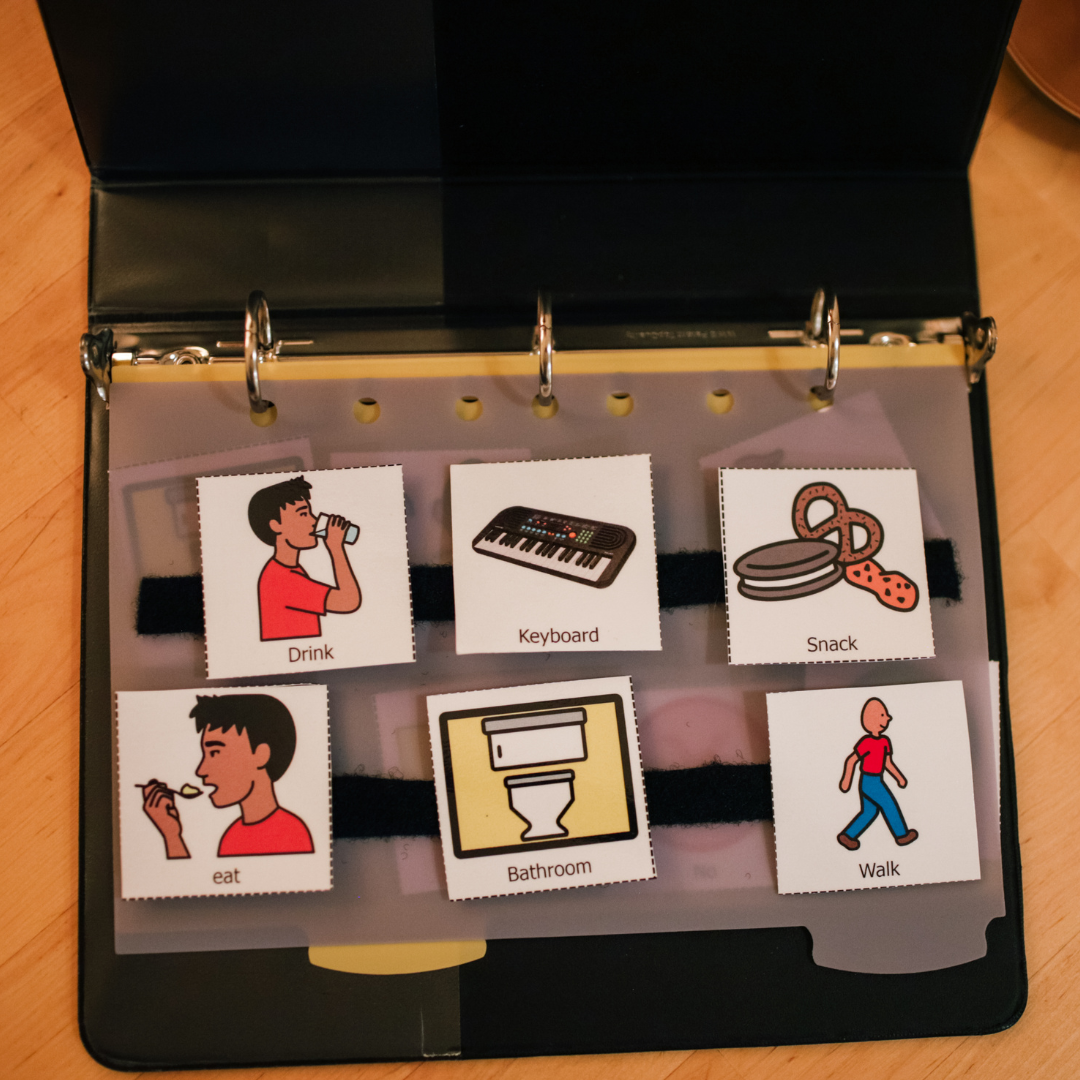
AAC;
speech-generating devices;
and written language.
Some autistic people use AAC full time.
Others use it only in particular situations.
A child who usually speaks may use AAC when overwhelmed or fatigued.
An adolescent may find typing easier than speech for emotionally complex topics.
A student may use speech during classroom discussion but a visual communication system to request a break.
These are not lesser forms of social language.
They are communication.
A goal such as:
“The student will verbally request help”
may therefore be unnecessarily restrictive.
A more appropriate goal may be:
“The student will independently communicate a request for assistance using speech, gesture, AAC, or another established communication modality.”
The outcome is successful self-advocacy.
What Should Social Communication Assessment Examine?
Social communication cannot be understood from one standardized test score.
A child may perform well when sitting across from an adult examiner in a quiet room and struggle substantially on a playground.
Another may answer hypothetical social questions correctly yet be unable to access the same strategy in real time.
ASHA recommends gathering information through methods such as:
naturalistic observation;
caregiver and teacher interviews;
standardized and nonstandardized measures;
language sampling;
conversation analysis;
and dynamic assessment.
Assessment may examine:
how the child initiates;
how they respond;
which communication functions they use;
how they repair misunderstanding;
how they manage topics;
whether communication changes across partners;
how sensory or environmental demands affect interaction;
and what supports improve communication.
Socially Focused Language Samples Can Be More Useful Than Hypothetical Questions
A useful development in 2026 is renewed emphasis on language sampling for social communication.
A recent ASHA tutorial describes ways clinicians can adapt ordinary language-sample procedures to elicit and measure social bids, responses, conversational management, and other social-communication behaviors that may be missed by norm-referenced tests.
This is particularly useful because:
“What should you say if someone misunderstands you?”
and
actually repairing a real misunderstanding
are not equivalent abilities.
A clinician can deliberately create an opportunity for repair:
Child:
“Give me that.”
Clinician:
“I'm not sure which one you mean.”
Now the clinician observes what happens.
Does the child:
repeat exactly?
point?
add a descriptor?
use AAC?
abandon the message?
become frustrated?
ask what the clinician misunderstood?
The interaction provides direct information about the communication process.
Social Communication Goals Should Be Functional
A weak goal might say:
“The student will demonstrate appropriate social skills in 80% of opportunities.”
What counts as appropriate?
According to whom?
In which context?
A stronger goal identifies the communication problem.
Communication Repair
“When a listener indicates misunderstanding, the student will repair the message by repeating, rephrasing, adding information, pointing, or using AAC in 4 of 5 observed opportunities.”
Self-Advocacy
“When spoken instructions are unclear, the student will independently request repetition, clarification, or additional processing time in 4 of 5 opportunities.”
Entering a Desired Interaction
“When the student indicates interest in joining a familiar peer activity, they will use one of their established entry strategies in 4 of 5 observed opportunities.”
Narrative Information
“When explaining a personal event to an unfamiliar listener, the student will include sufficient information about the people involved, relevant event, and outcome for the listener to follow the account in 4 of 5 probes.”
Topic Management
“During a mutually selected conversation, the student will respond to the partner's contribution and add related information or a question for at least three reciprocal exchanges.”
The difference is important.
These goals measure communication functions, not conformity.
What Does Research Say About Autism Social-Communication Intervention?
There is no single intervention with evidence for every autistic child or every social-communication target.
Current evidence supports several broad approaches, including:
naturalistic developmental behavioral interventions;
caregiver-mediated intervention;
joint-attention intervention;
peer-mediated intervention;
structured social-skills instruction;
video-based instruction;
AAC;
and other individualized language or communication approaches.
The strength of evidence differs across methods and outcomes.
Perhaps more importantly, generalization remains a persistent issue.
A child can improve substantially on the exact skill being taught in the treatment environment without showing the same degree of change in unrelated contexts.
Project AIM, a major autism-intervention meta-analysis, found that treatment effects were often larger for outcomes closely related to the intervention and for behaviors measured in contexts resembling treatment.
Its updated analysis reached a similarly cautious conclusion: some interventions show positive effects, particularly naturalistic developmental behavioral approaches on social-communication outcomes, but estimates become smaller or less certain when studies with higher bias risk are removed.
This makes one principle especially important:
A skill should eventually be measured where the child actually needs to use it.
Naturalistic Developmental Behavioral Interventions
Naturalistic Developmental Behavioral Interventions, or NDBIs, combine principles from developmental science and behavioral learning within child-led or naturally occurring activities.
Rather than practicing every skill at a therapy table, intervention may occur during:
play;
shared routines;
books;
movement;
social games;
or everyday activities.
NDBIs are not one program.
They include several established intervention models.
A 2025 overview of existing meta-analyses found generally positive effects of NDBIs on communication/language, cognition, and adaptive behavior in young autistic children, while effects varied across outcomes and reviews.
Earlier Project AIM analyses similarly found evidence for effects on social communication, language, and play but cautioned that many studies relied heavily on treatment-proximal outcomes and measures vulnerable to bias.
The strongest conclusion is therefore not:
“NDBIs fix social communication.”
It is:
NDBIs can support selected communication and developmental outcomes for some young autistic children, particularly when intervention targets are well defined and embedded in natural interaction.
What Does Naturalistic Social-Communication Intervention Look Like?
Suppose a child enjoys toy trains.
An adult can use that activity without turning it into a drill.
The child pushes a train toward a tunnel.
The adult pauses.
The child looks toward the tunnel and vocalizes.
The adult responds:
“Tunnel! The train is going in.”
Later, the adult may create an opportunity for the child to request help opening the tunnel.
Or comment when the train falls.
Or communicate “again.”
Or direct the adult to put the train somewhere.
The relevant target may be:
initiating;
commenting;
joint engagement;
expanding language;
or repairing communication.
The toy does not determine the therapy.
The communication target does.
Shared Attention Can Be Taught Without Requiring Eye Contact
Joint attention has been studied extensively in early autism intervention.
A 2025 meta-analysis of 18 randomized controlled trials involving 1,165 young autistic children found moderate average improvement in joint-attention skills following targeted intervention, although effects varied substantially across studies.
Joint attention involves coordinating attention around an object, person, event, or experience.
It does not require repeated eye contact.
A child may:
show an object;
point toward something interesting;
shift body orientation;
use AAC to comment;
laugh while sharing an activity;
or participate in a shared routine.
Current ASHA guidance explicitly recognizes that autistic joint attention may appear through engagement with shared objects or activities rather than conventional gaze behavior.
The clinical target should therefore be shared engagement or information, not “look at my eyes.”
Parent-Mediated Intervention: What the Evidence Actually Shows
Parents and caregivers can be effective communication partners in early intervention.
But claims that parent involvement always “accelerates progress” are stronger than the evidence supports.
A 2025 meta-analysis of parent-mediated intervention for autistic children under age 3 included 31 randomized trials, with 26 included in quantitative synthesis.
The overall effect was small.
Small positive effects were found for:
parent-child interaction;
parent responsiveness;
adaptive skills;
and social communication.
The review did not find significant overall effects on child language, cognition, or motor skills. Evidence certainty ranged from moderate to low.
Another 2025 systematic review of parent-mediated NDBIs identified eight randomized trials and found evidence suggesting benefits for social communication, language, and parent-child interaction, while also emphasizing variability in study quality and intervention protocols.
These reviews support caregiver involvement.
They do not support telling parents that the child's outcome depends on how well the family turns everyday life into therapy.
Parent Coaching Should Support Families, Not Transfer Therapy Responsibility to Them
The parent's role is not to replace the SLP.
A clinician may coach a caregiver to:
notice communication bids;
pause;
respond contingently;
model language;
expand an utterance;
create opportunities to communicate;
or use AAC alongside speech.
But the clinician remains responsible for:
assessment;
target selection;
strategy selection;
training;
monitoring;
and modification of intervention.
A parent should understand:
what strategy they are using;
what it is intended to support;
and
how to know when to stop or change it.
The objective is to integrate selected supports into family interaction—not transform meals, bath time, and play into continuous therapy assignments.
Parents Can Start by Responding to Communication That Already Exists
One of the strongest home strategies is simply learning to recognize the child's existing communication.
A child reaches toward the refrigerator.
That may be a request.
They bring a toy to a parent without saying anything.
That may be an invitation to share.
They repeat:
“Time to go?”
That may be a request for information or reassurance.
They push something away.
That may be refusal.
They type:
“Too loud.”
That is self-advocacy.
Respond first to the communicative function.
Then add language when useful.
For example:
Child:
“Truck.”
Parent:
“That truck is huge.”
Or:
Child:
“Time to go?”
Parent:
“You're asking when we're leaving. We leave after lunch.”
The adult is expanding the communication without demanding a performance.
Pausing Can Create Space for Communication
Adults often respond quickly when a child communicates slowly.
They repeat the question.
They ask a second question.
They offer choices.
Then they answer for the child.
For some autistic children, additional processing time changes performance considerably.
Instead of:
“What do you want? Juice? Water? Milk? Do you want juice?”
ask once and pause.
The child may respond through:
speech;
gesture;
looking toward the item;
pointing;
AAC;
or another communication form.
This is not a test of whether the child can produce the expected phrase.
It is an opportunity to communicate.
Following a Child's Interests Can Increase Communication Opportunities
Restricted or highly focused interests are sometimes treated only as problems.
They can also be powerful communication contexts.
A child fascinated by elevators may have considerably more to say about:
floors;
buttons;
doors;
movement;
buildings;
maps;
and trips
than about an adult-selected picture card.
The SLP can use that interest to work on:
questions;
descriptions;
narratives;
repair;
shared information;
perspective;
or peer interaction.
Intervention still expands the communication repertoire.
It simply begins somewhere the child already has knowledge and motivation.
AAC Can Be Part of Social-Communication Intervention
For autistic children with limited speech, AAC deserves consideration early rather than only after other interventions fail.
A 2025 systematic review and meta-analysis examining NDBIs with and without aided AAC found that language outcomes were larger when AAC was incorporated into NDBI procedures than when NDBIs were delivered without AAC, although the available comparative evidence remained limited.
ASHA also recognizes AAC as a primary or supplementary communication modality for autistic people, including people who use speech but cannot always meet all of their communication needs through speech alone.
Social-communication goals for AAC users should extend beyond requesting preferred items.
They can include:
commenting;
asking questions;
rejecting;
negotiating;
telling stories;
repairing misunderstandings;
expressing opinions;
and communicating boundaries.
Peer-Mediated Intervention Changes the Communication Environment
Social communication does not occur with clinicians alone.
Peer-mediated intervention teaches peers how to participate in interaction and respond to autistic classmates.
A 2026 systematic review examined 24 studies of peer-mediated social interventions for autistic children ages 6–12 in primary school settings.
Most studies reported improvements in targeted social skills.
However, only five included follow-up assessment, and maintenance findings were mixed.
That pattern is clinically important.
Peer-mediated intervention may improve social interaction where it is being actively supported.
Whether the change persists without that support is less certain.
Still, peer-mediated work has an important conceptual advantage:
it treats communication as an interaction between people rather than asking only the autistic child to change.
What Might Peer-Mediated Support Look Like?
A teacher or SLP might teach classmates to:
recognize different communication bids;
pause long enough for a response;
offer a clear entry into a game;
respond to AAC;
share materials;
ask rather than assume;
and repair misunderstandings.
This does not mean making peers into junior therapists.
The stronger goal is to create an environment in which more than one communication style can succeed.
For a child who wants peer interaction, this can create many more authentic practice opportunities than a weekly adult-led therapy group.
Group Social-Skills Programs Can Help—But Effects Are Usually Modest
Structured social-skills groups remain common for school-age autistic children and adolescents.
These programs may include:
direct explanation;
modeling;
role-play;
peer practice;
feedback;
problem solving;
and homework or community practice.
A 2025 systematic review and meta-analysis of 17 controlled studies found small-to-moderate average improvements in social skills, including communication, reciprocity, and joint attention. Outcomes varied by intervention type, participant characteristics, and implementation.
A 2024 meta-analysis focused on adolescents included 36 randomized controlled trials and 2,796 participants. Social-skills interventions produced a modest average improvement in social-skills outcomes, with significant heterogeneity and evidence of publication bias for some analyses.
So group treatment can be useful.
But the research does not support the idea that attending a social-skills group automatically changes everyday social communication.
What Should Parents Ask About a Social-Skills Group?
Instead of asking only:
“Does your clinic have a social-skills group?”
ask:
Which communication skills are being targeted?
How are children grouped?
Are peers involved?
How much of the session is actual interaction rather than worksheets or discussion?
How is progress measured?
Are skills practiced outside the treatment room?
How do you determine whether the child actually wants the type of social interaction being targeted?
Do goals include self-advocacy and boundaries as well as interaction?
A group designed around “appropriate behavior” is very different from a group teaching:
communication repair;
negotiation;
friendship problem solving;
interpreting ambiguity;
or joining a desired activity.
Group Therapy Should Not Teach One Correct Personality
Some children enjoy long conversations.
Others prefer brief exchanges.
Some use animated gestures.
Others have relatively flat facial expression.
Some enjoy large groups.
Others prefer one close friend.
A social-language program should not turn personality differences into treatment goals.
The relevant question is whether the person's communication style is preventing them from achieving their own social, educational, safety, or independence goals.
ASHA states that social-communication norms vary across cultures and communication communities and recommends evaluating whether communication effectively serves the individual's goals rather than imposing one universal social norm.
.png)


.png)