

A speech-language goal can look technically precise and still be poorly chosen.
A goal may contain a percentage, a prompt level, and a deadline, yet measure a skill that has little connection to the student's communication needs. Another may target an appropriate area but be so vaguely written that two clinicians could collect entirely different data. A third may be easy to measure in a therapy room but tell us little about whether the child communicates more successfully in class, at home, or with peers.
Effective goal writing begins before the goal sentence itself.
The clinician first has to determine what the communication difficulty is, how it affects the individual's activities or participation, what change is appropriate to target, and how that change can be observed reliably.
ASHA's current guidance for spoken language disorders describes intervention as individualized, dynamic, and responsive to ongoing assessment. Treatment targets should reflect the child's needs, languages, learning profile, and current developmental level rather than being selected from a fixed developmental sequence or generic goal list.
For school-based services, another layer applies. Under the Individuals with Disabilities Education Act (IDEA), an Individualized Education Program must contain measurable annual academic and functional goals designed to address needs resulting from the child's disability and enable participation and progress in the general education curriculum. The IEP must also describe how progress toward those goals will be measured and when progress will be reported.
That legal requirement sounds simple. Writing a defensible communication goal is considerably more complex.
What Is a Speech or Language Therapy Goal?
A speech-language therapy goal describes an intended change in communication performance.
Depending on the individual, goals may address:
- speech-sound production
- phonological patterns
- motor speech
- receptive language
- expressive language
- vocabulary and semantics
- morphology and syntax
- narrative language
- phonological awareness
- social communication
- fluency
- voice
- augmentative and alternative communication
- written language
- functional communication across several modalities
The goal should emerge from assessment.
If an evaluation shows that a student has difficulty understanding complex sentences, the treatment target may involve comprehension of particular syntactic structures.
If a child has a phonological disorder, the clinician may target contrasts or phonological patterns rather than write an isolated articulation goal.
If an autistic student can communicate requests easily but cannot reliably communicate when they need clarification, the more useful target may involve communication repair rather than increasing the number of requests produced in therapy.
ASHA's International Classification of Functioning, Disability and Health framework encourages clinicians to connect impairment-level findings with activities, participation, and contextual factors rather than viewing communication only as a collection of test scores.
A clinically strong goal therefore answers two questions:
What communication skill needs to change?
and
What will that change allow the individual to do?
Assessment Comes Before Goal Writing
Goal banks make it tempting to reverse the process.
A clinician sees a low vocabulary score, opens a semantic-goal list, selects an objective, and changes the name and percentage.
That is efficient documentation.
It is not necessarily good clinical reasoning.
Assessment should establish the child's communication profile before targets are selected. For language disorders, ASHA recommends evaluating the relevant domains of phonology, semantics, morphology, syntax, pragmatics, and discourse and considering the effect of the disorder on everyday communication and academic functioning.
For speech sound disorders, target selection may depend on the child's error pattern, stimulability, intelligibility, phonological system, age, severity, and the theoretical approach being used. ASHA describes several legitimate selection strategies, including developmental targets, client-specific targets, targets chosen for their effect on intelligibility, complexity-based approaches, and systemic approaches designed to produce broader phonological change.
This means that two children who both mispronounce /s/ may appropriately receive different goals.
One may have an isolated lateral distortion requiring establishment and generalization of /s/.
Another may demonstrate a broader phonological pattern affecting a class of fricatives.
The surface error is similar.
The treatment target is not necessarily the same.
The Starting Point Should Be the Present Level
A goal describes movement from one level of performance to another.
Without a baseline, the destination is difficult to justify.
Suppose a goal reads:
“The student will answer inferential questions with 80% accuracy.”
What is the student's current performance?
Twenty percent?
Seventy-five percent?
Can the student answer literal questions?
Do they understand the vocabulary in the passages?
Are difficulties limited to oral stories, or do they occur during reading as well?
Does performance change when visual supports are provided?
The same 80% criterion means something entirely different depending on the starting point.
For school-based IEPs, IDEA explicitly requires a statement of the child's present levels of academic achievement and functional performance and requires annual goals to address disability-related educational needs.
The relationship should therefore be visible:
present level → identified need → annual goal → intervention → progress data
When those pieces do not correspond, the goal becomes difficult to interpret and the resulting data may not answer the question the team actually needs to answer.
What Makes a Goal Measurable?
A measurable goal identifies performance clearly enough that progress can be observed and compared over time.
Most well-constructed communication goals contain several elements.
| Element | Question it answers |
|---|---|
| Behavior | What will the student do? |
| Context or condition | Under what circumstances? |
| Target or stimulus | With what language, sound, task, or communication demand? |
| Level of support | Independently, with visual support, with one verbal cue, etc.? |
| Criterion | How much or how consistently? |
| Measurement method | How will performance be recorded? |
| Functional context | Where or why does the skill need to occur? |
Consider:
“Student will improve expressive language.”
There is no observable behavior.
Compare it with:
“Given a pictured event or classroom experience, the student will formulate a grammatically complete sentence containing an appropriate subject, verb, and temporal or causal relationship in 8 of 10 opportunities across three data-collection sessions.”
Now the clinician knows what constitutes the behavior, what context will elicit it, and how performance will be measured.
But even that goal should not be accepted automatically.
The clinician still needs to determine whether sentence formulation is the appropriate intervention target for this particular student.
Precision does not substitute for clinical relevance.
Does Every Speech Therapy Goal Need to Be a SMART Goal?
No.
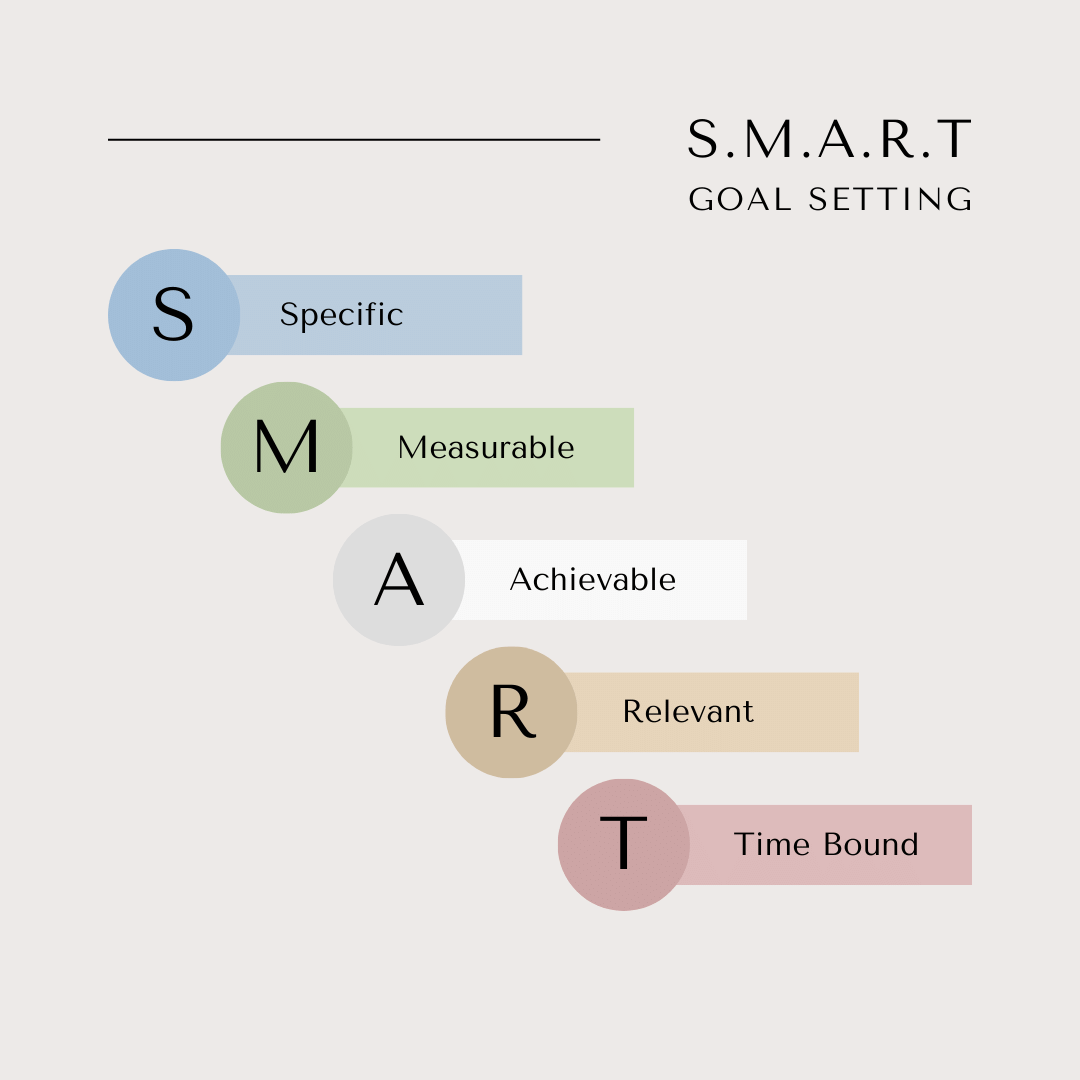
The SMART framework—usually defined as specific, measurable, achievable, relevant, and time-bound—can be a useful writing aid.
It is not a federal IEP requirement, and it should not be treated as a clinical law.
IDEA requires measurable annual goals addressing academic and functional disability-related needs. It does not require that goals follow the SMART acronym.
A 2025 pilot study in speech-language pathology tested a broader intervention-planning framework that incorporated elements of SMART goal writing together with the Rehabilitation Treatment Specification System. The authors described promising initial results but also identified the work as an early test of the framework rather than evidence that one goal-writing formula should govern all SLP practice.
SMART can therefore function as a quality check.
Is the target specific?
Can progress be measured?
Is the criterion reasonable given the baseline?
Does the target correspond with the individual's communication needs?
Is there a defined period for review?
Those questions are useful.
The acronym should not dictate clinical reasoning.
The Common “80% Across Three Sessions” Formula Is Not a Requirement
Speech-language goals frequently end with:
“with 80% accuracy across three consecutive sessions.”
Sometimes that is appropriate.
Sometimes it is copied automatically.
There is no ASHA rule or IDEA regulation stating that a communication skill is mastered at 80% accuracy across three sessions.
IDEA requires measurable goals and a method for measuring progress. It does not prescribe an accuracy percentage.
The criterion should fit the skill.
For a safety-related communication behavior, 80% may be too low.
For the emergence of a difficult motor-speech target, 80% may be unnecessarily high at an early stage.
For conversation, percentage accuracy may not even be the most useful measurement.
For AAC, counting spontaneous communication functions across settings may tell the team more than an arbitrary percentage.
For narrative language, a rubric or count of story components may provide better information.
For speech intelligibility, listener-based measures may be more functional than accuracy on a small word list.
The criterion is part of the clinical decision.
It should not be a template default.
IEP Goals and Clinical Therapy Goals Are Related but Not Identical
A clinic treatment plan and an IEP operate in different contexts.
A clinical goal may address a communication impairment because it affects the individual's health, participation, independence, or daily communication.
A school IEP goal must be tied to the student's educational needs resulting from the disability.
Under IDEA, the IEP must contain measurable academic and functional goals designed both to support progress in the general curriculum and to address other educational needs resulting from the disability.
For example, a school-age child may produce /r/ inaccurately.
That finding alone does not tell the IEP team what the educational goal should be.
The team needs to consider whether the speech disorder affects classroom participation, intelligibility, reading or spelling, oral presentations, peer communication, self-advocacy, or another area of educational performance.
The speech goal can still target /r/, but the reason for school intervention should be educationally relevant.
Similarly, a language goal should not simply duplicate a standardized-test subtest.
A student does not attend school in order to score higher on the CELF.
The assessment identifies the impairment.
The IEP goal addresses the resulting educational need.
IDEA Does Not Require Short-Term Objectives for Every Student
Another common misconception concerns objectives and benchmarks.
Under current federal IDEA regulations, all IEPs must contain measurable annual goals.
However, federal law requires benchmarks or short-term objectives specifically for children who take alternate assessments aligned with alternate academic achievement standards.
The 2004 reauthorization removed the previous federal requirement that every student's IEP contain short-term objectives. States or local systems may impose additional requirements, and teams may still use objectives when they are helpful, but they are not universally required by IDEA.
That distinction matters when clinicians build goal-bank templates.
A template should not present a local documentation convention as though it were federal law.
A Strong Goal Connects Impairment With Function
ASHA's ICF resources encourage person-centered functional goals that connect communication with everyday activities and participation.
Consider a student with difficulty producing complex sentences.
An impairment-level goal might be:
“The student will produce compound sentences using and, but, and or with 80% accuracy.”
That can be clinically useful.
But the team can make the context more informative:
“When explaining classroom events, comparing ideas, or responding to curriculum-based questions, the student will formulate compound sentences using appropriate conjunctions in 4 of 5 opportunities with no more than one verbal cue.”
Now the skill is still measurable, but the goal also points toward why the sentence structure is being taught.
The same principle applies across domains.
Speech sounds should eventually generalize into communication.
Vocabulary should support comprehension and expression.
Narrative intervention should improve the child's ability to explain experiences, comprehend stories, or participate academically.
AAC should increase access to communication—not simply increase button presses.
Writing Speech Therapy Goals for Autistic Children
Autism should not have its own generic set of speech goals.
Autistic children have highly varied communication profiles.
One child may use fluent spoken language but require support with inferential language and communication repair.
Another may communicate through speech, gestures, and an AAC device.
Another may need extensive support developing symbolic communication.
Another may have age-appropriate structural language but difficulty communicating under conditions of stress.
ASHA's current autism guidance recommends individualized intervention based on the person's communication development, culture, preferences, learning profile, family resources, and communication needs. Communication may involve speech, gestures, sign, AAC, speech-generating devices, writing, or a combination of modalities.
The diagnosis autism therefore does not identify the therapy goal.
The communication assessment does.
Autism Goals Should Not Simply Train Neurotypical Appearance
Goals involving understanding nonverbal cues and initiating conversations may be appropriate for some children.
Either might be appropriate for a particular child.
Neither should be automatic.
Social communication varies across cultures and individuals. ASHA explicitly cautions against applying one set of social norms universally and notes that behaviors such as eye contact are influenced by cultural and individual differences.
A more defensible social-communication goal begins with a functional problem.
For example:
“When a communication breakdown occurs during a classroom or peer activity, the student will use their preferred communication modality to request repetition, clarification, additional processing time, or another needed support in 4 of 5 observed opportunities.”
That goal does not require the student to appear more neurotypical.
It teaches a communication skill that increases access and autonomy.
Another student may need to communicate boundaries:
“During structured and naturally occurring interactions, the student will independently communicate acceptance, refusal, or a request to stop using speech, gesture, AAC, or another preferred modality in 4 of 5 opportunities.”
Another may need support entering activities they want to join:
“When the student indicates interest in joining a familiar peer activity, they will use one of their established entry strategies to communicate with the group in 4 of 5 opportunities with visual support as needed.”
The purpose is participation—not performance of a prescribed social style.
Turn-Taking Goals Need More Precision
Consider this goal:
“Participate in five turn-taking exchanges during a 10-minute activity.”
It is measurable.
But what is the communication problem?
Is the child unable to wait?
Do they have difficulty responding to another person's message?
Do they have insufficient language to maintain a topic?
Are they uninterested in the selected activity?
Can they engage successfully when discussing a preferred topic?
Counting turns alone does not answer those questions.
A more precise goal might be:
“During a mutually selected conversation or cooperative activity, the student will respond to a partner's contribution and add related information, a question, or an acknowledgment for at least three reciprocal exchanges in 4 of 5 observed interactions, with visual support available as needed.”
Even this should be individualized.
For some students, the primary need may be maintaining a topic.
For others, it may be initiating.
For others, repairing misunderstanding.
For others, communicating that they do not want to continue the interaction.
AAC Goals Should Target Communication, Not One Device or Program
Some goal banks attach PECS to a functional-communication goal.
PECS is a legitimate intervention, but it is one specific AAC approach, not the default communication system for autistic children.
ASHA describes AAC as multimodal and individualized. Systems may include gestures, signs, pictures, communication boards, speech-generating devices, writing, or combinations of these options. AAC assessment and intervention should reflect the individual's needs across environments.
PECS has a defined six-phase protocol based on picture exchange and behavioral teaching principles. It should not be used as shorthand for AAC generally.
A stronger goal focuses on the communication function:
“Across classroom and therapy routines, the student will independently use their preferred communication modality to request an item or action, reject or protest, request assistance, and comment, demonstrating at least three different communicative functions during the observation period.”
The device is then the means of access.
It is not the behavioral endpoint.
Current systematic-review evidence also supports combining aided AAC with naturalistic developmental behavioral interventions for some autistic children with limited speech. A 2024 systematic review and meta-analysis identified 29 relevant studies and found larger aggregate language effects when AAC was included in NDBI procedures than when NDBIs were used without AAC.
Expressive Language Goals: Define What “Expression” Means
“Improve expressive language” is not a usable treatment target.
Expressive language includes multiple systems:
- vocabulary
- word retrieval
- morphology
- syntax
- sentence formulation
- narrative
- expository language
- verbal reasoning
- discourse
ASHA's language-disorder guidance describes different treatment targets according to the individual's age and profile. For school-age students, targets may include curriculum vocabulary, subtle word meanings, morphology, complex syntax, paraphrasing, discourse, and communication repair.
The goal should identify the specific part of expressive language that is limiting communication.
Sentence-Length Goals Need More Than a Word Count
An example goal might propose expanding sentences from two to four words.
That can be appropriate for an early language learner.
But sentence length is only a rough measure of language development.
Compare:
“Mommy car cookie dog.”
with:
“Daddy is sleeping.”
The first contains four words.
The second contains three words but demonstrates a clear semantic relationship and grammatical structure.
A stronger early expressive-language goal may specify the relationships the child is learning:
“During play and familiar routines, the child will independently combine two or more words or symbols to express at least three semantic relationships—such as agent + action, action + object, possession + object, or recurrence + object—across three consecutive sessions.”
For a child at a later language level:
“When describing pictured or experienced events, the student will formulate grammatically complete sentences containing an appropriate subject, verb, and relevant elaboration in 8 of 10 opportunities with no more than one verbal cue.”
The target follows the language profile rather than a generic word-count expectation.
Narrative Goals Should Identify the Part of Storytelling That Is Weak
“Retell a story with a beginning, middle, and end” is commonly used in goal banks.
It is easy to understand but clinically imprecise.
Narratives involve several systems at once:
- story grammar
- event sequencing
- causal relationships
- character knowledge
- cohesion
- temporal language
- syntax
- vocabulary
- perspective
A student may include all three broad sections of a story yet still produce a narrative that is impossible for an unfamiliar listener to follow.
A more specific goal might read:
“After listening to or reading a grade-appropriate narrative, the student will retell the story including the character, setting, problem, at least two causally or temporally connected events, and outcome, using an organizational support as needed, in 4 of 5 probes.”
A different child may already have story structure but weak cohesion:
“During narrative retell, the student will use pronouns, noun references, conjunctions, and temporal terms sufficiently to maintain clear reference and relationships among events in 80% of scored opportunities.”
The two students need different narrative goals even though both might originally be described as having “difficulty retelling stories.”
Semantic Goals Are About Meaning
An /s/ articulation goal does not belong under semantic therapy.
Semantics concerns word meaning and relationships among meanings.
An articulation goal belongs under speech-sound production.
ASHA's language guidance describes semantic intervention as addressing vocabulary knowledge, depth of word meaning, curriculum vocabulary, multiple meanings, abstract language, figures of speech, and relationships among words and concepts.
A semantic goal should therefore measure how a child understands or uses meaning.
Vocabulary Goals Should Measure More Than “10 New Words”
A goal such as:
“Learn 10 new vocabulary words in four weeks.”
tells us very little about what “learn” means.
Can the child point to the word?
Define it?
Use it in a sentence?
Identify a synonym?
Explain how it relates to another concept?
Understand it in a new text?
Vocabulary knowledge is multidimensional.
A stronger school-age semantic goal might be:
“Given an unfamiliar curriculum-related Tier 2 word encountered in text, the student will use available context, morphology, and semantic relationships to determine and explain a reasonable meaning in 4 of 5 opportunities.”
For a younger child:
“During play, book reading, and picture-based activities, the child will identify and describe familiar vocabulary using at least two semantic features—such as category, function, appearance, location, or association—in 8 of 10 opportunities with visual support.”
These goals measure what the child can do with lexical knowledge, not merely whether the word appeared on a therapy list.
Receptive Language Goals Need Careful Task Analysis
Following-directions goals are common:
“The student will follow two-step directions with 80% accuracy.”
Again, the sentence is measurable but incomplete.
What makes the directions difficult?
Length?
Vocabulary?
Spatial concepts?
Temporal terms?
Syntax?
Working memory?
Attention?
Consider:
“Get the pencil and the book.”
and:
“Before you put the pencil under the folder, circle the picture beside the book.”
Both could be called “two-step directions.”
The language demands are completely different.
If assessment identifies difficulty with temporal concepts, the goal might read:
“Given oral classroom directions containing before and after, the student will identify and complete the required actions in the correct temporal sequence in 4 of 5 opportunities with no more than one repetition.”
If the difficulty is syntactic:
“The student will demonstrate comprehension of sentences containing temporal and subordinate clauses by selecting, acting out, or explaining the correct interpretation in 80% of structured and curriculum-based probes.”
The goal now identifies the linguistic problem instead of using task length as a proxy.
Speech-Sound Goals Should Reflect the Treatment Approach
Consider this /s/ example—
“produce /s/ in all positions with 80% accuracy”
—is recognizable, but even articulation goals require more clinical detail.
ASHA describes speech-sound intervention as progressing broadly through establishment, generalization, and maintenance. Target selection varies substantially according to the child's error type and treatment approach.
For a child with an isolated /s/ distortion who can produce a correct /s/ in words, a conversational generalization goal may be appropriate:
“During structured conversation, the student will produce /s/ accurately in previously established word positions and phonetic contexts in at least 80% of opportunities with no more than one verbal or visual cue across three data-collection sessions.”
For a child with a phonological collapse, an individual /s/ accuracy goal may be inappropriate.
A multiple-oppositions or contrast-based approach may instead target the child's phonemic system.
ASHA explicitly notes that children with different types of speech-sound errors may require different treatment methods, even when the incorrect productions appear superficially similar.
Consider Generalization When Writing Speech Goals
A child may produce a speech sound with 100% accuracy on flashcards and rarely use it in conversation.
That does not mean therapy has failed.
It means the skill is at a particular stage of acquisition.
ASHA describes treatment progression from establishment to generalization and then maintenance. Generalization includes using established productions in progressively more complex contexts, including syllables, words, phrases, sentences, and conversation.
Goals can reflect that hierarchy.
Establishment:
“Given visual and verbal placement cues, the student will produce an accurate /r/ in selected facilitating contexts in 8 of 10 trials.”
Generalization:
“The student will produce established /r/ targets accurately in self-generated sentences in 80% of opportunities with no more than one cue.”
Conversation:
“During a five-minute conversational sample, the student will maintain accurate production of established /r/ contexts in 80% of scored opportunities while independently using a self-monitoring strategy.”
These are not three versions of the same goal.
They represent different stages of learning.
.png)




.png)