
Speech Therapy Documentation Software for School-Based SLPs
Record speech-language goal data during individual or group sessions, draft notes from the goals addressed, and prepare progress reports from the performance you document.
Access Beta
Speech therapy tools for a full school caseload
Keep student records, appointments, goals, and reports together, with notes that reflect each student’s responses and the cues you provided.


Keep up with speech therapy paperwork
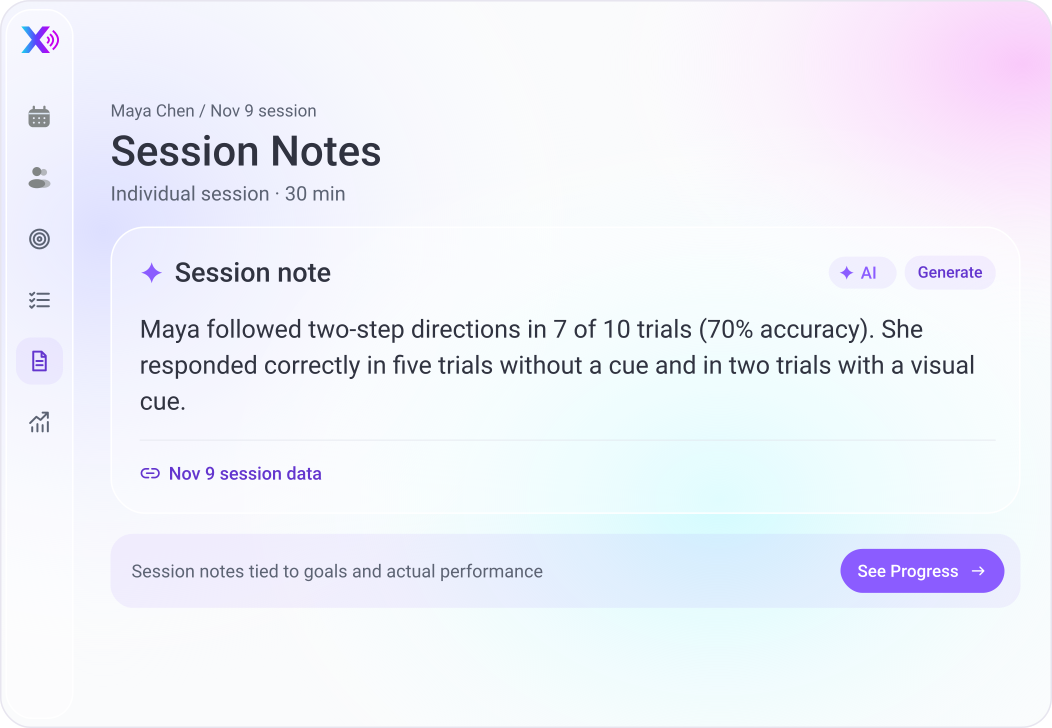
Mixed-goal groups and back-to-back sessions make it hard to finish notes before the next student arrives. Record responses and prompting during therapy, then use those details to prepare notes, progress updates, and present levels for your review.
For independent SLPs across school settings
Keep student goals, session data, therapy notes, and IEP progress monitoring in one workspace, wherever you provide services.
Keep up with documentation between online sessions
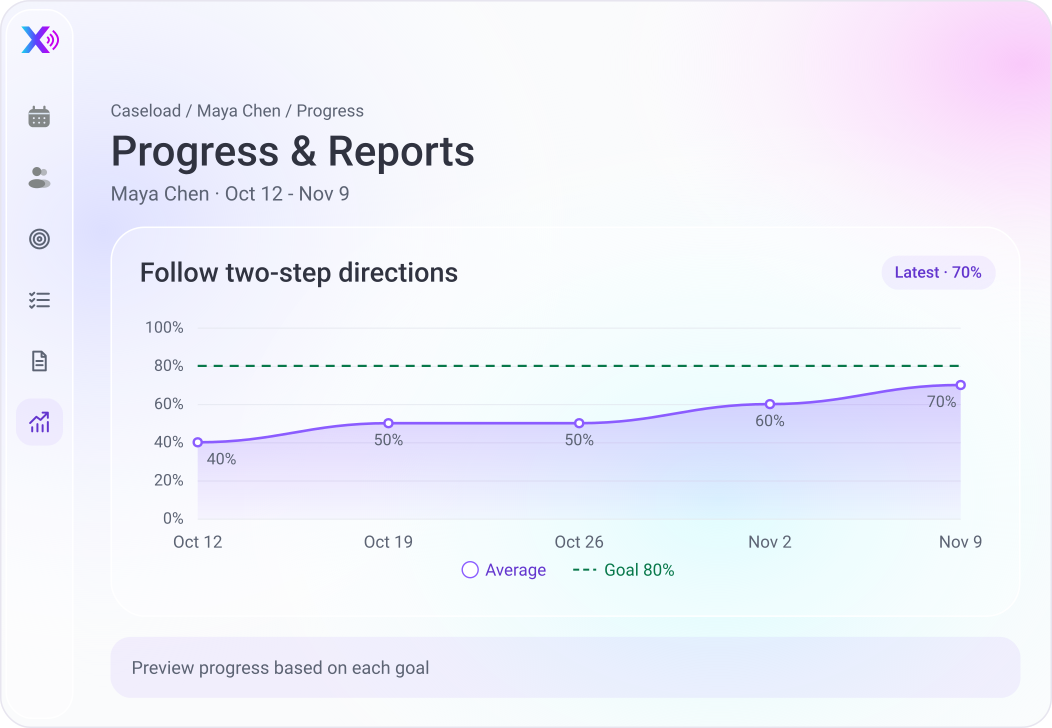
Back-to-back teletherapy sessions leave little time to keep track of student data. Record student responses, accuracy, and prompting for each goal as you deliver therapy, with session notes that reflect what you worked on. Generate progress reports in seconds based on how each student performed during their sessions.

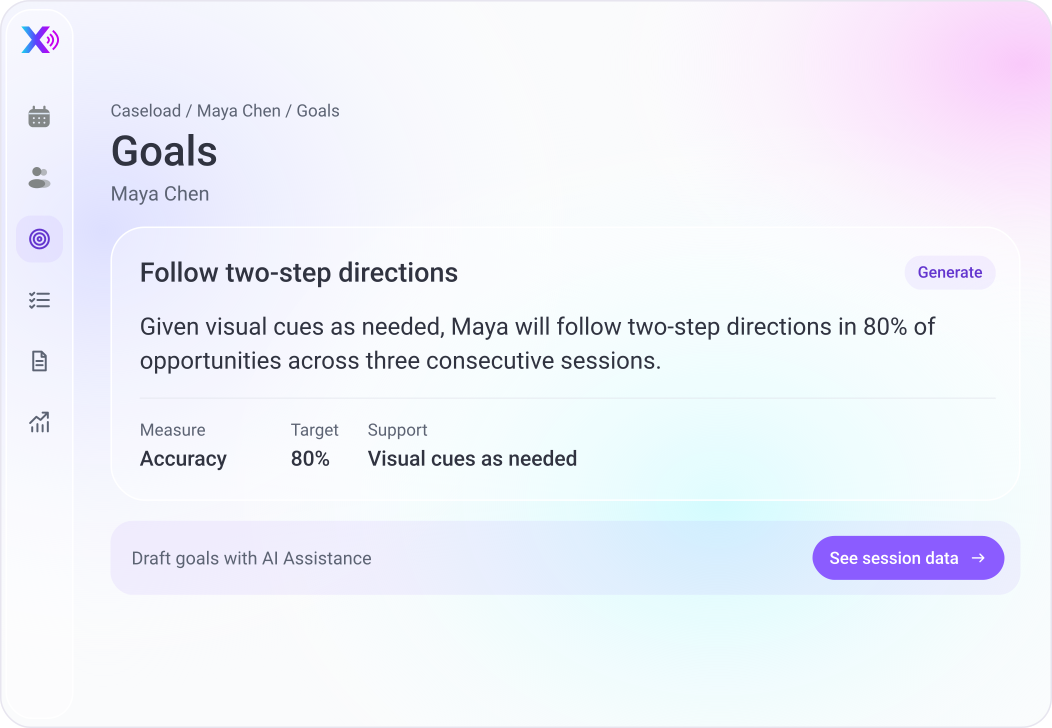
Goals based on student needs
Use the goal builder to write measurable targets based on each student’s speech-language needs.

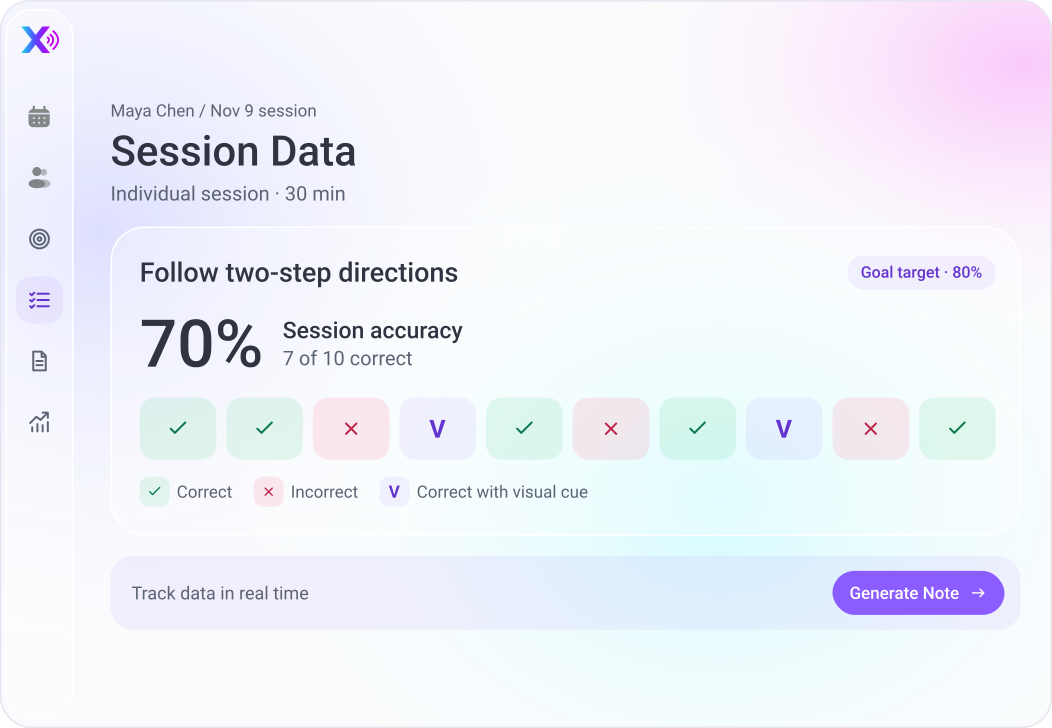
Session notes for the goals addressed
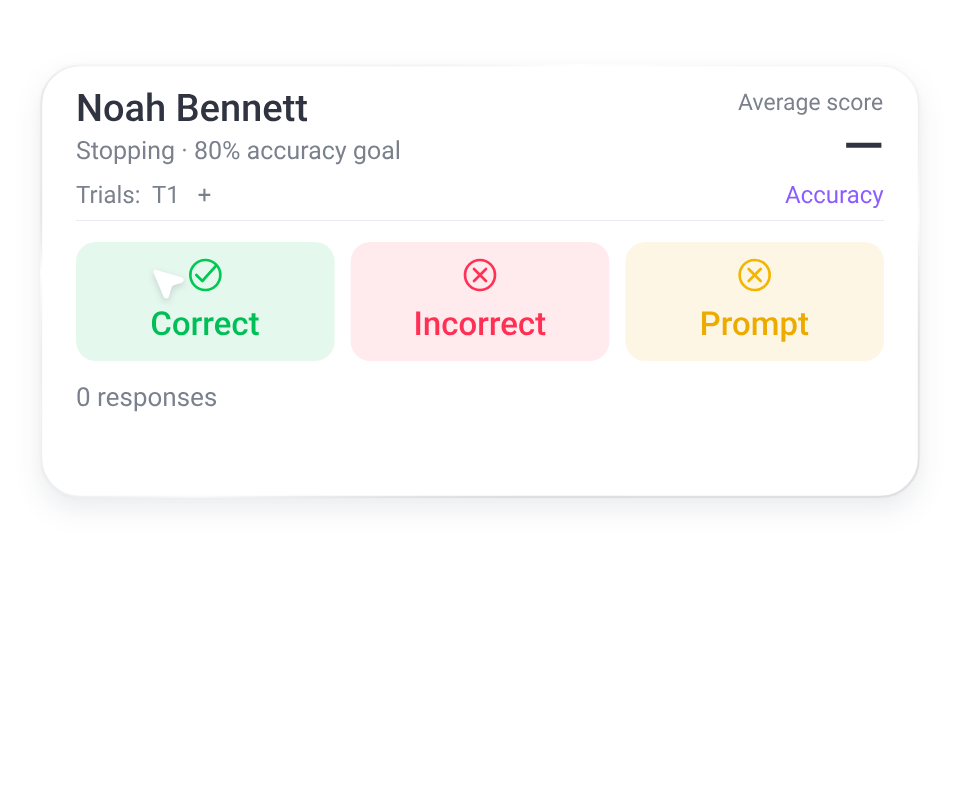
Record trials, responses, and prompting for each goal, then use those details to draft your session notes.

Present levels ready for meetings
Draft present levels from session results and observations for your review before team meetings.
Keep notes manageable across schools
School calendars, mixed-goal groups, and team meetings can leave little time for notes. Keep each student’s responses and cueing with the goals addressed, then use those records to prepare school updates and present levels.

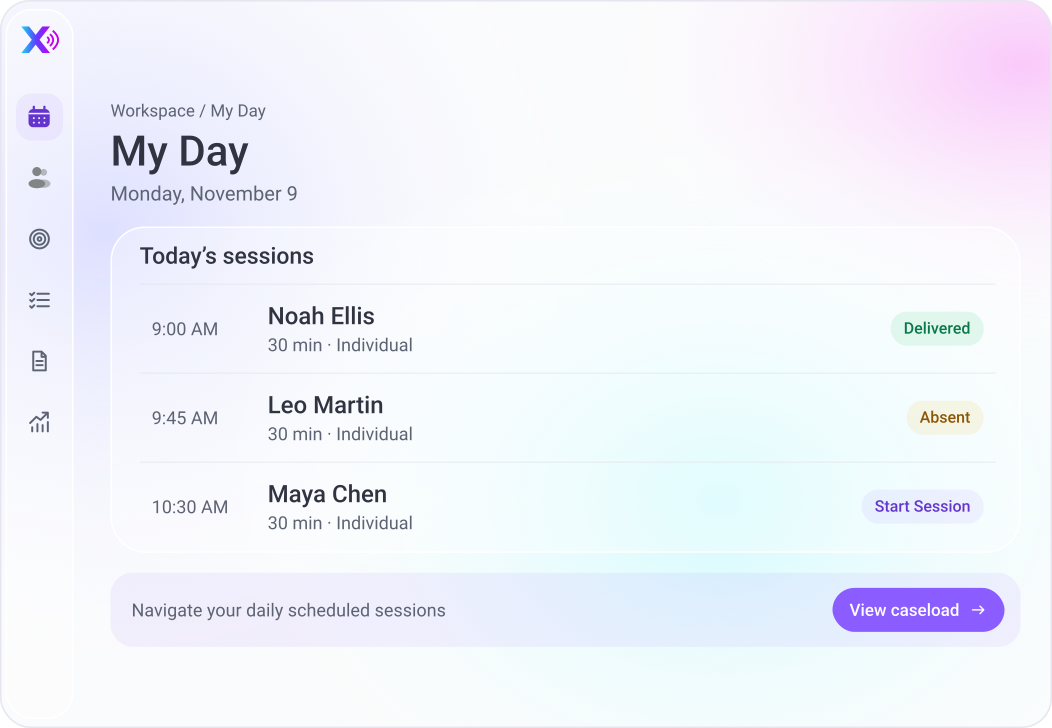
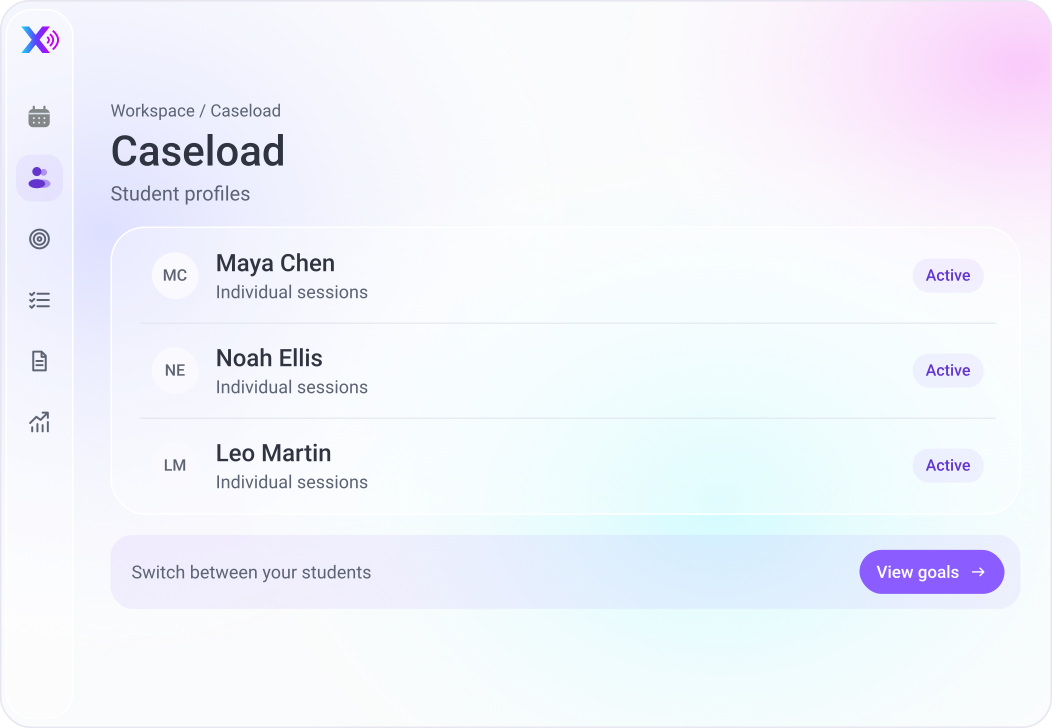
Caseload and schedules
Keep upcoming sessions and student records easy to find.
Notes for mixed-goal groups
Record each student’s performance and cueing for the goals addressed during individual or group therapy.

Progress reporting
Prepare school updates from documented progress and observations.
Make time for therapy and family conversations
Families need to know how communication is changing in everyday activities. Record independent responses, cueing, and AAC use during therapy, then prepare progress updates that explain strengths, ongoing needs, and practice priorities.

Individualized, measurable goals
Use the goal bank to build targets based on the student’s communication needs and priorities for everyday learning.

Goal-linked session records
Document performance on each goal, including independent responses and responses that required cues or modeling.
Progress families can follow
Use documented performance to explain gains, support needs, and next steps with families.
Turn daily session data into IEP present levels
IEP meetings bring reporting deadlines alongside your regular caseload. Record responses and prompting for each IEP goal during therapy, then draft progress reports and present levels from those results and your observations.
Need-based IEP goals
Use the goal bank to develop measurable speech-language goals informed by assessment findings and student needs.
Notes specific to each student
Record each student’s accuracy, responses, and prompting for the goals addressed, including during mixed-goal groups.
IEP progress and present levels
Summarize strengths, current performance, and support needs in a present-level draft for your review.
Student Data. In One Place.
Set measurable goals, collect session data, and use it to draft present levels.
Choose a workflow
Open a card to see the iSpeax demo.
One Workflow From Goals to Reports
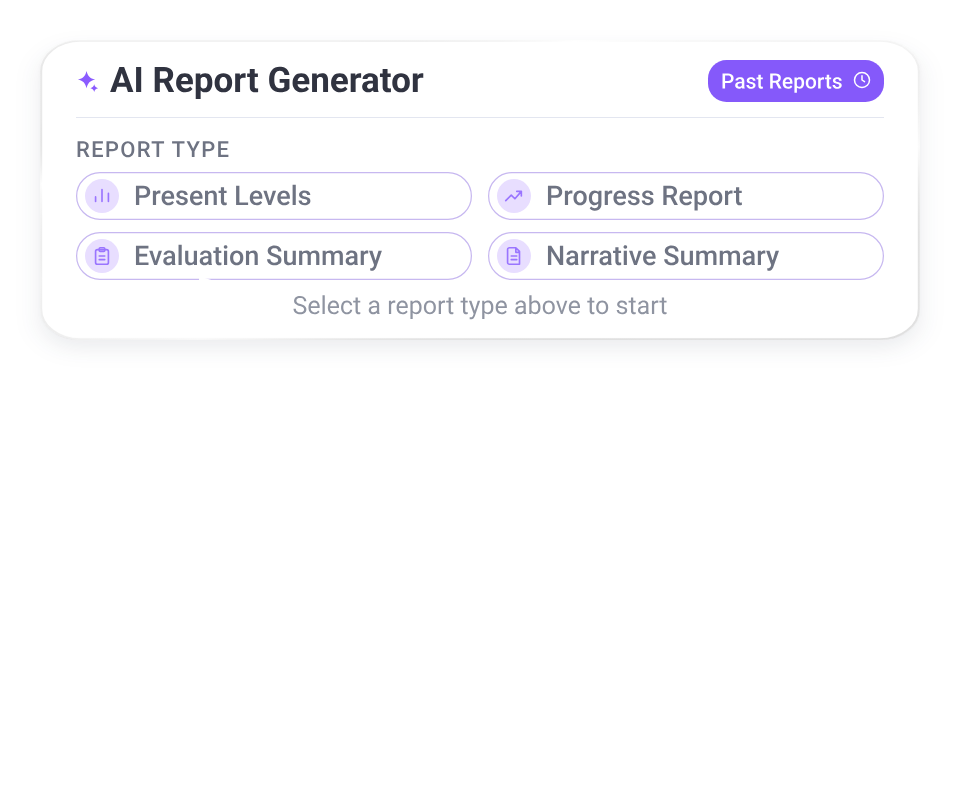
Create measurable goals, schedule services, collect session data, draft notes, monitor progress, and generate reports from one connected workspace.

Less speech therapy paperwork. More time for students.
Keep your school caseload, session notes, goals, and reports together so preparing for the next student takes less of your day.